
Tactile Drawing for Blind Students: Art You Can Feel brings a practical, hands-on approach to accessible learning. The ideas below can be adapted for educators, families, and learners of different ages.
What is tactile drawing?
Tactile drawing represents lines, shapes, and spatial relationships in a format that can be explored by touch. It can support artistic expression, communication, orientation, and concept development. Unlike a visual picture alone, a tactile composition invites the artist and audience to trace the marks physically.
Start with meaningful shapes
Begin with a single line, circle, square, or triangle. Invite the learner to follow the shape with a finger, describe its features, and redraw it. Build up to familiar places and objects such as a house, tree, or simple map. Keep the drawing uncluttered and use verbal discussion or labels when helpful.
The BrailleDoodle approach
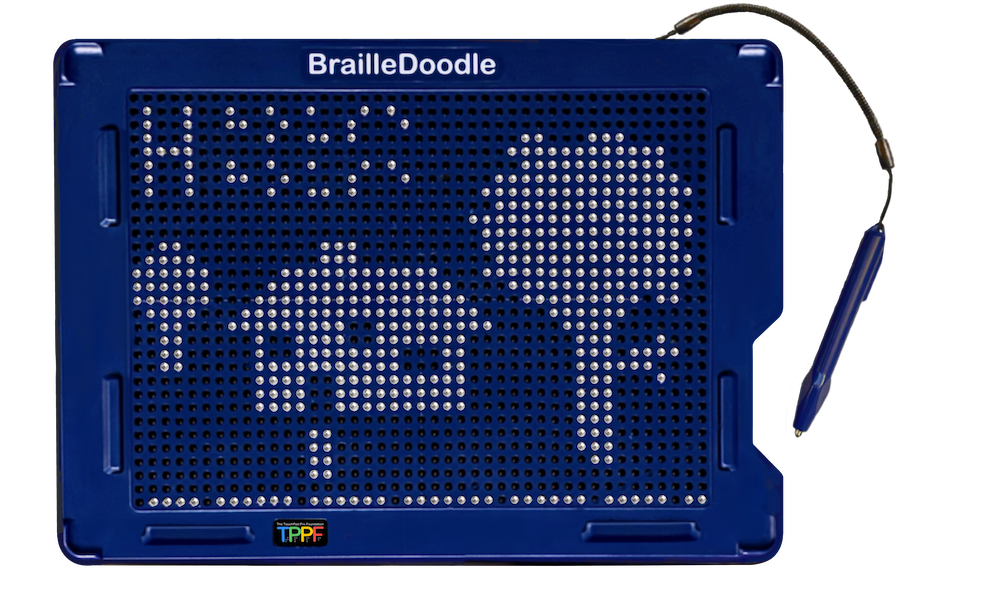
BrailleDoodle uses raised metal balls that can be lifted with a magnetic stylus and pressed down to erase. Its Doodle Side has a grid of 41 columns by 31 rows, providing 1,271 possible positions. The same tablet also includes a separate Braille learning side. It is reusable and screen-free, with a current retail price of $179 USD.
Inclusive art activities
Try collaborative shape guessing, tactile self-portraits built from simple symbols, or a classroom gallery where students describe each other’s work respectfully. Invite students who are blind and sighted to work together without assuming all blind learners prefer the same tactile representations.
Teaching considerations
Allow sufficient time for exploration, and check whether a drawing is comfortable and intelligible by touch. Avoid crowding too many details into a small space. A learner with additional disabilities may benefit from simpler shapes or guided exploration. Visit BrailleDoodle.org for the learning tablet and more ideas.
Related topics: Braille literacy, tactile learning, accessible education, and inclusive art.