For more than 20 years, my classroom was full of laughter and creativity. During my tenure as a Visual Arts Educator at NYISE (The New York Institute for Special Education), a school for blind and low-vision students, I watched brilliant children show extraordinary curiosity and intelligence. I was inspired like never before by every child and teenager’s enthusiasm for life, refusing to be defined by their vision impairment.
In early 2020, the pandemic hit. Overnight, the hands-on materials my students needed were unavailable. Most went home with nothing–to a screen they couldn’t see. The rate at which my students were learning didn’t just slow; in many areas, it stopped.
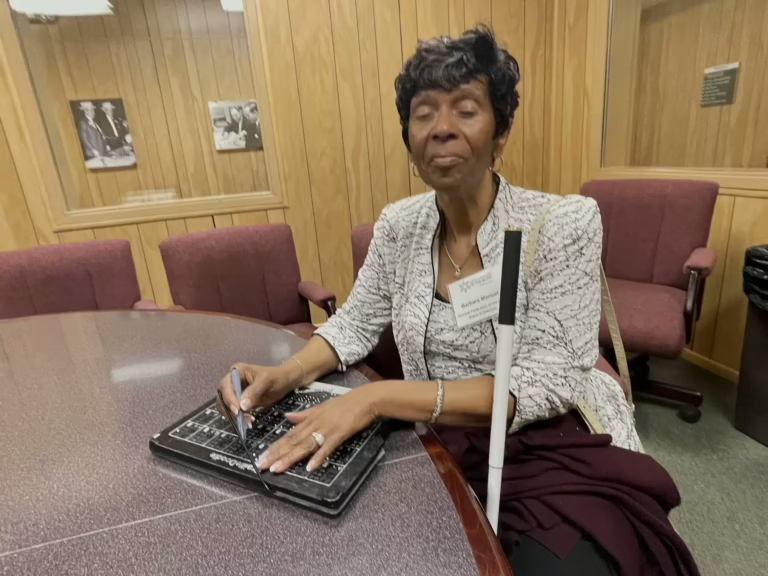
Day after day, I witnessed how, without access to assistive technological devices and equipment, their way of tactile learning was restricted. Many families faced barriers to accessing affordable Braille materials and tactile graphics. Drawing, shapes, math, and diagrams could be difficult to explore independently at home. I came to understand that access to tactile learning was a challenge far beyond my own classroom.
It became clear that the world needed a low-cost, durable device that could put tactile learning into the hands of every person who could benefit from it. Such a device would provide anyone with the opportunity to learn regardless of their location or economic situation.
I began sketching and tinkering. Night after night, I sat at my desk with magnets, toys from Amazon, metal beads, cardboard, duct tape, and my trusty X-Acto knife. I asked myself: How do we give a learner with a vision impairment something as fun as a toy, yet that will work as a powerful and intuitive learning tool that any blind or low-vision child or adult could use at home or at school?
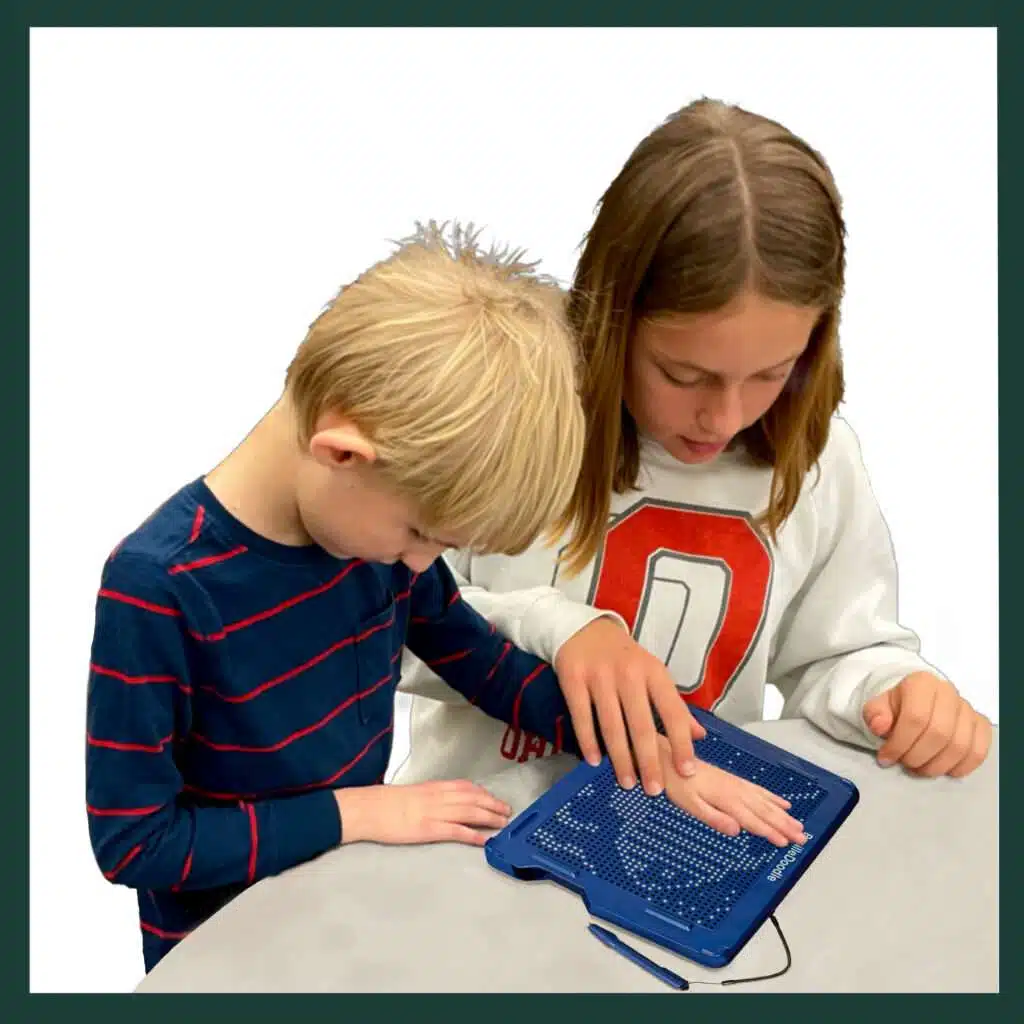
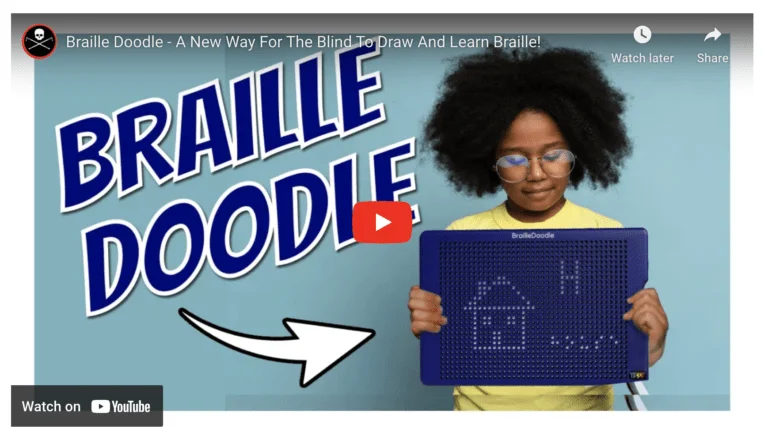
Over months of trial and error, a simple but revolutionary idea began to emerge, a two-sided tactile tablet—one for drawing and exploration, one for learning and practicing Braille. No electricity or Wi-Fi required. From touch and imagination to a pathway to literacy, creativity, and independence.
In December 2021, I founded The TouchPad Pro Foundation Inc. (TPPF). It took years of research, fundraising, and engineering to bring us to where we are now. Over time, we became a diverse team of parents, educators, accessibility specialists, researchers, clinicians, and nonprofit leaders—many of whom are blind or have low vision. Without help from the TPPF team, the BrailleDoodle, as it is, would not exist. Together, we bring deep expertise and lived experience to expanding Braille literacy and tactile learning worldwide.